

Pre-award due diligence in Africa is critical for donors, foundations and development partners assessing whether prospective implementing partners have the governance, financial management, institutional capacity and operational readiness required to manage funding responsibly.
But there is an important distinction between verifying what an organisation says about itself and understanding how that organisation is likely to perform in its operating environment.
Documents can establish whether an organisation has the required policies, registration documents, financial records and governance structures.
Local insight can help determine whether those structures translate into effective practice.
Consider a familiar scenario.
The pre-award due diligence is complete.
The preferred implementing partner satisfied the assessment requirements. Governance appeared sound, documentation was complete and management interviews were positive.
The award was approved.
Several months later, implementation began to drift.
Reporting became inconsistent. Stakeholder coordination slowed. Key milestones started slipping, and questions emerged about the organisation’s ability to deliver as originally proposed.
For Grants Managers, Procurement Leads, foundations and development partners, this raises an important question:
How can comprehensive pre-award due diligence still leave funders exposed to implementation risk?
Often, the answer is not a lack of documentation.
It is the absence of independent verification and local insight.
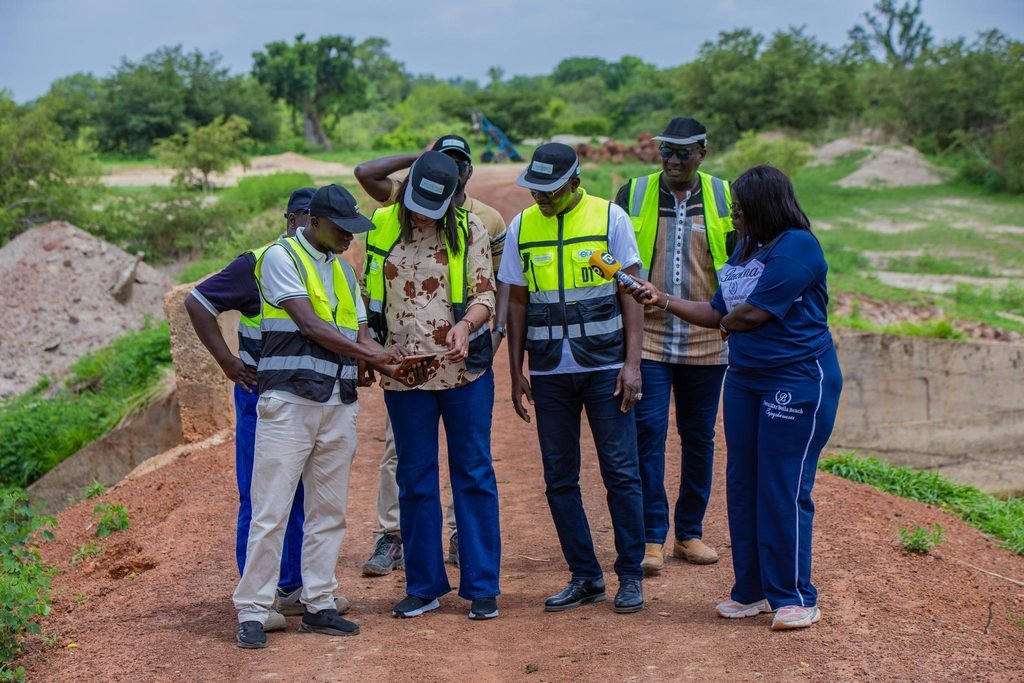
What Is Pre-Award Due Diligence in Africa?
Pre-award due diligence in Africa is the process of assessing a prospective implementing partner before a grant, contract or other form of funding is approved.
The objective is to establish whether the organisation has the governance structures, financial controls, organisational capacity and operational systems required to manage resources and deliver programme objectives responsibly.
A typical assessment may examine:
- Legal registration and regulatory compliance
- Governance and leadership structures
- Financial management and internal controls
- Organisational policies and procedures
- Previous programme experience
- Management capacity
- Operational systems
- Reporting capability
- Potential conflicts of interest
- Reputation and stakeholder relationships
- Risks associated with the operating environment
The assessment is particularly important where funders are working with organisations they have not previously supported or where they have limited in-country presence.
However, conducting due diligence across African markets can involve additional complexity.
Relevant information may be distributed across regulators, financial institutions, previous funders, local stakeholders, implementing partners and other independent sources. Regulatory requirements and operating conditions may also differ significantly between countries.
This means a funder can have substantial documentation and still lack a complete understanding of an organisation’s operational reality.
That is where local insight becomes important.
Documents Explain the Institution. Local Insight Explains the Environment.
Documentary review is fundamental to effective implementing partner due diligence.
Registration documents, financial statements, governance records, policies, organisational structures and previous reports provide important evidence about institutional capability.
But implementation does not happen inside a policy manual.
It happens within a specific regulatory, economic, institutional and stakeholder environment.
Across African markets, the evidence required to assess an implementing partner may not sit in one place.
Registration information may come from a regulator. Statutory compliance may require separate verification. Previous programme experience may need to be confirmed through references or stakeholders. Operational capacity may require evidence beyond what appears in an organisational profile.
No single source necessarily provides the complete picture.
Effective pre-award due diligence in Africa therefore requires funders to reconcile evidence from multiple sources.
The question is not simply:
“Does the organisation have the required documents?”
The more important question is:
“Do the documents, interviews and independent evidence collectively demonstrate that the organisation is capable of delivering in practice?”
That distinction can materially strengthen the funding assessment.
What Conventional Due Diligence May Not Show
Documents explain how an organisation is designed to operate.
Local verification can help explain how it operates in practice.
An organisation may demonstrate strong governance on paper while important decisions remain concentrated in a small number of individuals.
An organisation may present well-established partnerships in its proposal while those relationships have limited involvement in day-to-day programme delivery.
An organisation may have policies covering financial controls, procurement and reporting while implementation practices differ from documented procedures.
These observations do not automatically mean that an organisation is unsuitable for funding.
They indicate areas that may require further verification, clarification or risk mitigation.
This is why pre-award due diligence in Africa should not be viewed solely as a compliance exercise.
The objective is to understand whether institutional capability is likely to translate into reliable programme delivery.
Why Local Verification Matters in African Markets
Local verification provides an additional layer of evidence that can help funders understand the context surrounding an implementing partner.
Depending on the nature, value, complexity and risk profile of the proposed award, independent verification may help assess:
- Organisational registration and legal standing
- Regulatory and statutory compliance
- Governance and decision-making structures
- Financial management practices
- Previous donor or funder relationships
- Operational presence and capacity
- Key management and leadership information
- Claims regarding partnerships and programme experience
- Relationships with relevant stakeholders
- Potential conflicts of interest
- Local reputation and operating context
- Country-specific regulatory considerations
- Other factors that may affect implementation
The purpose is not to replace documentary due diligence.
It is to test, validate and contextualise the evidence.
When information from documents, interviews and independent sources is consistent, funders can have greater confidence in their assessment.
When the evidence does not align, the discrepancy itself becomes important.
It may warrant further investigation before funding is committed.
Local Insight Connects Evidence to Implementation Reality
Experienced assessors rarely rely on a single source of evidence.
Instead, they may reconcile:
Documentary evidence + management interviews + independent verification + local context = a more complete risk picture.
Consider two prospective implementing partners with similar proposals, comparable financial information and equally positive management interviews.
On paper, they may appear very similar.
Their implementation environments, however, may be considerably different.
One may have established relationships with relevant local stakeholders. Another may have limited operational presence in the proposed programme area.
One may have extensive experience navigating local regulatory requirements. Another may be entering the environment for the first time.
One may have a well-established operational structure. Another may depend heavily on a small number of individuals or external partners.
These differences may not always be immediately visible through standard documentation.
Local insight helps examine the relationship between institutional capability and implementation reality.
What Experienced Funders Do Differently
Experienced funders understand that pre-award due diligence in Africa is not simply about verifying compliance.
It is about establishing sufficient confidence to make an informed funding decision.
A risk-based assessment may combine several layers of evidence.
1. Documentary Review
Review registration documents, financial information, governance records, policies, previous reports and other relevant organisational evidence.
2. Management Interviews
Assess leadership capability, decision-making, internal controls, operational understanding and the organisation’s ability to explain its systems and practices.
3. Independent Verification
Test material claims and information against credible external sources.
4. Local Operational Insight
Understand how the organisation operates within its regulatory, stakeholder and programme environment.
5. Risk Reconciliation
Identify and investigate inconsistencies between documentary evidence, management representations and independent findings.
This approach does not necessarily mean conducting a longer assessment.
It means conducting a more informed assessment.
Why This Matters for Donors and Development Partners
A funding decision carries more than financial exposure.
Funders may also be exposed to:
- Programme delivery risk
- Reputational risk
- Governance risk
- Financial management risk
- Regulatory risk
- Fraud and misuse-of-funds risk
- Stakeholder relationship risk
- Delayed programme outcomes
- Contractual and reporting failures
The cost of identifying these risks after an award may be greater than identifying them before resources are committed.
For international organisations with limited in-country presence, the challenge can be even greater.
A funder may understand the broader regional context while having limited visibility into the specific operating environment of an implementing partner.
Independent donor due diligence in Africa can therefore provide an additional layer of assurance before a funding decision is finalised.
Is Remote Pre-Award Due Diligence Enough?
Remote due diligence can be effective for many aspects of an assessment.
Documents can be reviewed digitally. Management interviews can be conducted virtually. Financial statements and organisational policies can be analysed remotely.
However, remote assessment may have limitations.
Certain operational realities can be difficult to establish through documents and video calls alone.
These may include:
- Whether an organisation has a meaningful operational presence
- How it interacts with local stakeholders
- Whether claimed partnerships are active in practice
- How management structures function outside formal documentation
- Country-specific regulatory considerations
- Local perceptions of an organisation
- Operational practices that may not appear in formal policies
This does not mean every due diligence exercise requires physical verification.
The appropriate level of local verification should reflect the risk, value, complexity and geographic scope of the proposed award.
The greater the potential exposure, the greater the importance of reliable independent evidence.
When Should a Funder Use an Independent Due Diligence Partner?
An independent third-party assessment can be particularly valuable when:
- The funder has limited in-country presence.
- The implementing partner is new to the funder.
- The proposed award is financially significant.
- The programme will operate across multiple African countries.
- The operating environment presents additional complexity.
- The funder needs objective verification of material claims.
- There are inconsistencies within the available documentation.
- The programme involves multiple local stakeholders.
- The funder requires additional assurance before approving an award.
An independent partner can help bridge the gap between what an organisation reports about itself and what can be independently established about its operating capability.
This is where specialised pre-award due diligence in Africa can provide meaningful value to donors and development partners.
A Practical Framework for Pre-Award Due Diligence in Africa
A robust pre-award assessment can be structured around five questions.
1. Is the organisation legitimate?
Verify its legal identity, registration, governance structure and relevant statutory obligations.
2. Is the organisation financially capable?
Assess financial statements, internal controls, reporting systems, funding history and the capacity to manage the proposed resources.
3. Is the organisation operationally capable?
Determine whether its people, systems, partnerships and operational infrastructure are sufficient for the proposed programme.
4. Does independent evidence support what the organisation says?
Compare organisational claims with credible external sources and relevant stakeholder evidence.
5. Can the organisation realistically deliver in its operating environment?
Consider country-specific regulations, stakeholder dynamics, operational conditions and other contextual factors that may affect implementation.
These questions help move the assessment from document verification to informed risk assessment.
The Difference Between Compliance and Confidence
Compliance tells a funder whether an organisation appears to meet specified requirements.
Confidence goes further.
Confidence comes from understanding whether the evidence is consistent, whether material claims can be independently supported and whether the organisation’s capability is likely to translate into successful implementation.
A partner can be compliant and still present implementation challenges.
A partner can have strong documentation and still lack sufficient operational capacity.
A partner can have experienced leadership and still face challenges navigating a complex local environment.
Effective grant due diligence therefore requires funders to look beyond whether requirements have been technically satisfied.
The objective is to reduce uncertainty before the award is made.
How Can Funders Strengthen Pre-Award Due Diligence?
Funders can strengthen their approach by combining documentary assessment with independent verification and contextual analysis.
A practical process may include:
- Establish clear due diligence criteria before assessment begins.
- Review documentary evidence systematically.
- Conduct structured management interviews.
- Identify material claims requiring independent verification.
- Assess the local operating environment.
- Conduct reference or stakeholder checks where appropriate.
- Reconcile information from different sources.
- Document identified risks and their potential implications.
- Develop proportionate mitigation measures.
- Clearly record the evidence supporting the funding decision.
The objective is not to eliminate every risk.
No due diligence process can do that.
The objective is to ensure that material risks are identified, understood and considered before funding is committed.
Conclusion: Why Local Insight Matters
Pre-award due diligence in Africa is one of the most important risk-management processes in the funding lifecycle.
It influences not only who receives funding, but also the level of confidence a donor or development partner has in the organisation’s ability to deliver.
Strong documentary evidence remains essential.
But documents alone rarely provide a complete picture of implementation capability.
Across African markets, information may be distributed across multiple institutions, stakeholders and sources. Understanding how an implementing partner operates within its local environment can therefore provide valuable context that conventional assessments may miss.
The strongest funding decisions are not necessarily supported by the greatest volume of documentation.
They are supported by the clearest understanding of the organisation, the evidence surrounding it and the environment in which implementation will take place.
Because pre-award due diligence establishes institutional capability.
Local insight helps verify how that capability is likely to perform once implementation begins.
Frequently Asked Questions About Pre-Award Due Diligence in Africa
What is pre-award due diligence in Africa?
Pre-award due diligence in Africa is the process of assessing a prospective implementing partner before a grant, contract or other funding award is approved. It typically examines governance, financial management, organisational capacity, compliance, operational capability and implementation risks.
Why is local verification important during pre-award due diligence in Africa?
Local verification can help funders test documentary evidence against independent information from relevant institutions, stakeholders and other credible sources. This provides additional context about an organisation’s operational capability and local environment.
How do development partners verify implementing partners before awarding funding?
Development partners may combine document review, management interviews, financial assessment, compliance verification, reference checks and independent local verification. The precise approach should reflect the size, nature and risk profile of the proposed funding.
Is remote pre-award due diligence sufficient when assessing implementing partners in Africa?
Remote assessment can effectively address many aspects of due diligence, but it may not reveal certain operational, stakeholder or country-specific risks. Where implementation risk is significant, independent local verification can provide an additional layer of assurance.
What risks should funders consider during pre-award due diligence?
Funders should consider governance, financial management, regulatory compliance, operational capacity, reputational exposure, stakeholder relationships, potential conflicts of interest, fraud risk and country-specific factors that could affect programme implementation.
When should an international organisation engage an independent due diligence partner in Africa?
Independent due diligence can be particularly useful when an organisation has limited in-country presence, is assessing a new implementing partner, is making a significant funding commitment, is operating across multiple African markets or requires objective verification before an award.
What is the difference between pre-award due diligence and post-award monitoring?
Pre-award due diligence takes place before funding is committed and focuses on assessing the prospective partner’s capability and risk profile. Post-award monitoring takes place during implementation and focuses on whether the funded organisation is delivering according to agreed requirements, controls and programme objectives.
How can funders strengthen implementing partner due diligence?
Funders can strengthen due diligence by combining documentary review with management interviews, independent verification, local insight, risk-based assessment and reconciliation of evidence from multiple sources
Even robust pre-award due diligence in Africa has limitations.
In the next article, “What Strong Pre-Award Due Diligence Still Misses,” we explore why experienced funders look beyond documentation and management interviews to identify implementation risks that conventional assessments may overlook.
The goal is not simply to conduct more due diligence.
It is to build a clearer evidence base for better-informed funding decisions.
Written by EP Martins Advisory